
Online construction control: a new standard for developers
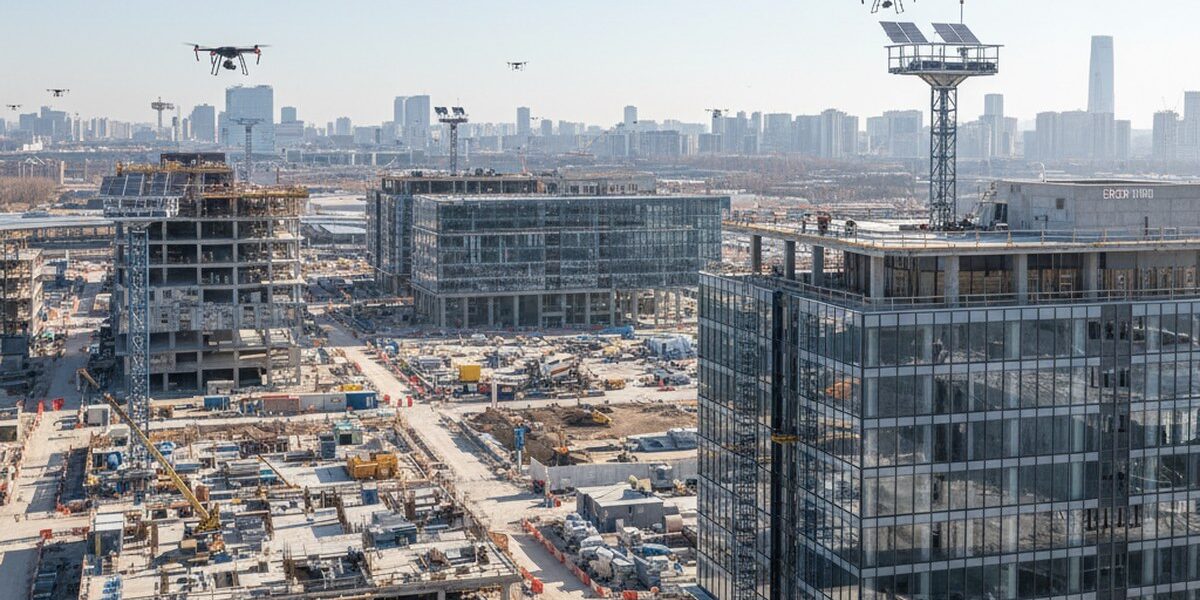
Online 3D construction control is a remote supervision format where each stage of construction is recorded as a traversable digital twin of the object. The developer, technical supervision, investor, and designer access a browser and see the site as if they were there in person – with the ability to measure distances, compare stages, and rewind the history of works. According to developers who have switched to regular 3D fixation, the average time for approving hidden work acts is reduced from 7–10 days to 1–2. The technology is especially in demand for objects over 5,000 m² and for remote management of a portfolio of construction sites in different regions.
Why does a construction site need a 3D tour?
Digital fixation of the object immediately solves several typical problems for developers – from disputes with contractors to claims from buyers of finished housing. Specific benefits:
- 40% time saving on site visits. The chief project engineer, who supervises 4–6 sites, spends up to 25 hours a week traveling. A 3D virtual tour replaces 70% of site visits: checking wall geometry, engineering systems, and finish quality is available from the office.
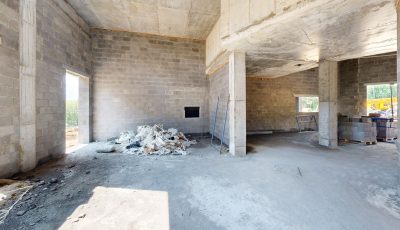
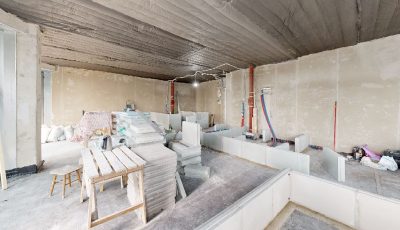
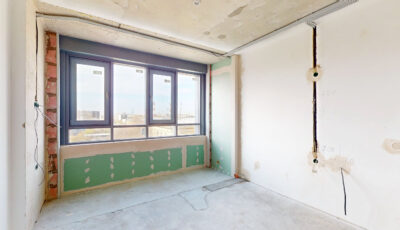
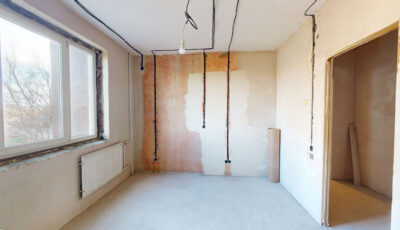
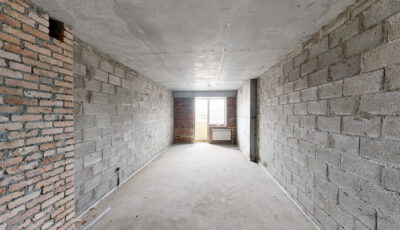
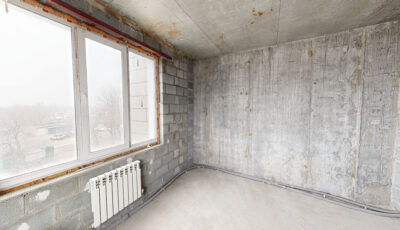
- Evidence base for hidden works. Each shooting point receives coordinates and a timestamp. In disputes with the general contractor or subcontractor, the virtual tour acts as a notarized record — it shows what and when was done before closing the screed, plaster, or suspended ceiling.
- 30–50% reduction in acceptance cycle. Equity holders and commercial tenants get access to a virtual tour of the finished space before a personal visit. Disputed points are identified in advance, and an in-person inspection takes 20 minutes instead of an hour.
- Sales acceleration by 15–20%. A virtual tour of a property under construction, updated monthly, increases buyer trust: they see real progress, not renders from a brochure.
- Quality control of finishing before signing KS-2. Matterport scanning accuracy is up to 1% for linear dimensions. This is enough to dispute volumes with a contractor without repeated tape measure measurements.
How does it work?
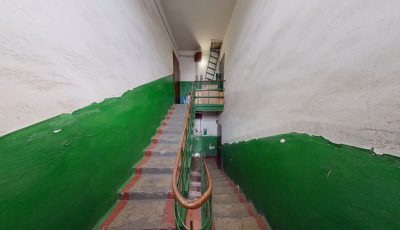
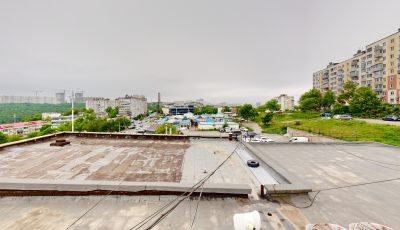
The process is divided into three stages: shooting, processing, and virtual tour delivery to the client. An operator with a Matterport Pro3 camera or similar certified equipment goes to the site. Shooting points are placed every 2–3 meters — for a typical floor of 1,000 m², this is about 80–100 scans and 4–5 hours of work. The camera simultaneously captures 360° panoramas and collects a lidar point cloud: the result is a geometrically accurate 3D model, not just a collage of photos.
Processing and assembling the virtual tour takes 24 to 72 hours, depending on the size of the object. The finished virtual tour includes a Dollhouse mode (overall building view with floor cuts), floor plans with automatic dimensions, and a distance measurement tool directly in the browser. On-site, you can place remark tags linked to contractor tasks — each remark has precise spatial coordinates.
360° Space offers three options for virtual tour storage and delivery: hosting on the company's cloud platform with high-speed servers and technical support, deploying the virtual tour on the client's own infrastructure (for developers with information security requirements), or offline assembly – a standalone version for PC and a separate build for a VR headset, which works without internet on closed, restricted facilities.
The frequency of shooting is selected according to the work stages: usually, developers fix the object before closing each layer — after the monolithic structure, before plastering, before floor installation, at the finish of decoration. For active construction, 1 time every 2–4 weeks is optimal.
How much does online 3D construction control cost?
The cost of shooting is calculated based on the object's area and access complexity. Estimated market range and 360° Space tariffs:
- Up to 500 m² — from 25 000 ₽ per visit, virtual tour ready in 1–2 days.
- 500–2,000 m² — 50–120 thousand ₽, optimal format for commercial properties and townhouses.
- 2,000–10,000 m² — 120–400 thousand ₽, typical cost of a floor in a residential complex or a production workshop.
- From 10,000 m² — individual calculation, with regular series of shoots, a discount of 15–25% applies.
Additional payment is required for virtual tour hosting (or one-time setup of deployment on the client's server) and integration with the developer's CRM or BIM system, if required. It is more convenient to calculate an accurate estimate for a specific object using a calculator, specifying the area, number of floors, and desired frequency of repeat shoots.
Frequently asked questions
Can a virtual tour be used as evidence in arbitration?
Yes. The virtual tour records the geometry and condition of the object with a timestamp. When drawing up an acceptance certificate or expert opinion, the 3D model is accepted as visual evidence along with photo documentation and measurement protocols.
How accurate are the measurements within the virtual tour?
The error of Matterport Pro3 and comparable cameras is about 1% for linear dimensions at distances up to 10 meters. This is sufficient for checking finished room dimensions, openings, and calculating work volumes in disputes with contractors.
How often should an object be re-scanned?
For active construction – once every 2–4 weeks and definitely before closing hidden works. For a finished object at the sales stage, one scan is enough, with updates for redevelopments or renovations.
Is the virtual tour only available online or can it be used without internet?
360° Space delivers the virtual tour in three formats: in the company's cloud, on the client's server, and as an offline build for PC or VR headset. The offline version is in demand at restricted facilities and in field conditions without stable connectivity.
Order a 3D tour for your property
Leave your contact — we'll respond within 30 minutes and calculate the cost